
Coyote Hunting Guide
Learn how to hunt coyotes with the Predator Hunting Academy's complete learning guide. Whether you're just getting started or refining advanced calling strategies, explore expert guides covering coyote behavior, seasonal hunting, stand setup, calling techniques, night hunting, equipment, and much more.
Guide Navigation
Jump directly to the section you want to explore, or work through the Coyote Hunting Guide from beginning to end to build your knowledge step by step.
Coyote Hunting By Season
Understanding how coyote behavior changes throughout the year is one of the fastest ways to become a more successful predator hunter. Explore the complete Annual Coyote Behavior Calendar, compare every hunting season, and dive deeper into five detailed seasonal hunting guides.
Explore The SeriesGetting Started
New to predator hunting? Start here. These guides cover the fundamentals of coyote hunting, helping you avoid common mistakes while building a strong foundation for long-term success.
Coyote Hunting 101
Learn the fundamentals of coyote hunting, including basic calling techniques, equipment, stand setup, and what to expect on your first hunt.
Read GuidePredator Hunting 101
Discover universal predator hunting principles that apply to coyotes, foxes, bobcats, and many other predator species.
Read GuideCommon Beginner Mistakes
Avoid the most common predator hunting mistakes that cost new hunters opportunities on stand.
Read GuideBeginner Gear Setup
Build a reliable predator hunting setup without overspending by choosing equipment that delivers the greatest value.
Read GuideChoosing Your First Predator Hunting Stand
Learn how to identify productive stand locations using wind direction, visibility, terrain, and coyote travel routes.
Read GuideHow To Call Coyotes
Learn the basic calling sequence every coyote hunter should know before moving into more advanced seasonal strategies.
Read GuideUnderstanding Coyotes
The more you understand coyote biology, behavior, habitat, communication, and seasonal instincts, the easier it becomes to predict where coyotes will be and how they are likely to respond.
Coyote Behavior Guide
Explore how coyotes think, communicate, establish territories, hunt, and react to predators, prey, and changing environmental conditions throughout the year.
Read GuideCoyote Vocalizations
Learn what different coyote vocalizations mean, how coyotes communicate naturally, and what their sounds reveal about behavior and social structure.
Read GuideCoyote Habitat Guide
Discover the types of terrain, cover, food sources, travel corridors, and habitat features that consistently hold coyotes throughout the year.
Read GuideCoyote Tracks & Sign
Learn how to identify coyote tracks, scat, travel routes, bedding areas, and other field sign to locate productive hunting areas.
Read GuideCoyote Breeding Season
Understand the biology behind the breeding season, territorial behavior, pair bonding, and how breeding influences coyote movement.
Read GuideCoyote Denning Behavior
Learn where coyotes establish dens, how they protect pups, and how denning behavior affects hunting strategy during spring and early summer.
Read GuideHow To Scout For Coyotes
Find productive hunting locations by scouting habitat, identifying fresh sign, locating food sources, and recognizing high-probability stand locations.
Read GuideRed Fox vs. Coyote
Compare habitat preferences, behavior, vocalizations, tracks, and hunting strategies to better understand the differences between red foxes and coyotes.
Read GuideGray Fox vs. Coyote
Learn how gray foxes differ from coyotes in habitat, behavior, vocalizations, movement patterns, and hunting tactics.
Read GuideSeasonal Hunting
Coyotes change dramatically throughout the year. Learn how breeding, food availability, weather, territorial behavior, and pup development influence where coyotes are, how they respond, and which calling strategies are most effective during every season.
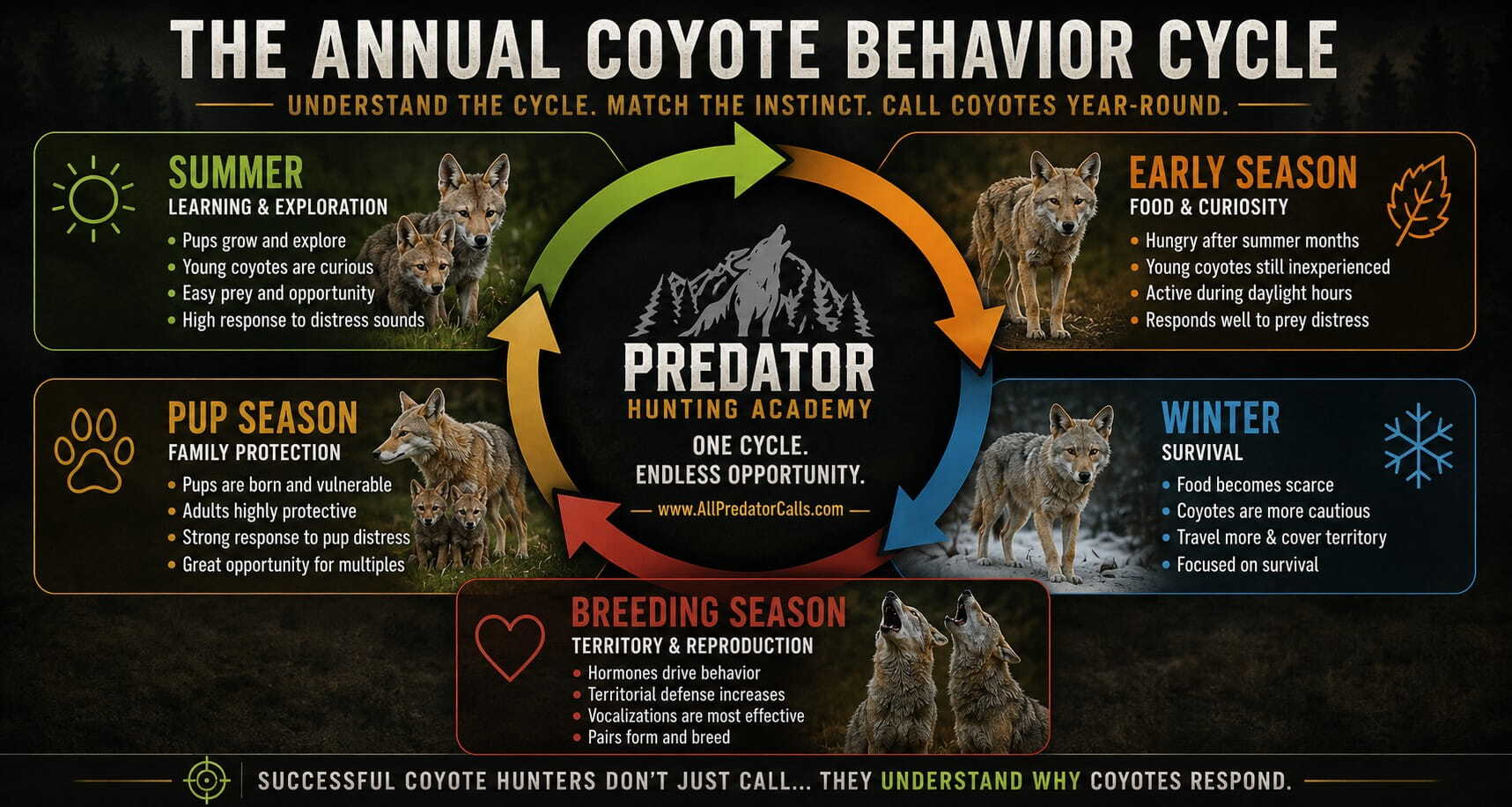
Figure 1. The Annual Coyote Behavior Cycle illustrates how coyote motivations change throughout the year and serves as the foundation for the five seasonal hunting guides below.
Before diving into the individual seasons, we recommend starting with our comprehensive Coyote Hunting By Season guide. It explains the complete annual behavior cycle and provides an overview of the strategies used throughout the year.
Early Season Coyote Hunting
Learn why young, inexperienced coyotes are especially vulnerable during early fall. Discover the best prey distress sounds, stand setups, and tactics for calling curious coyotes before hunting pressure begins to build.
Read GuideWinter Coyote Hunting
Winter changes everything. Learn how food scarcity, cold temperatures, snow cover, and increased hunting pressure influence coyote behavior and how to adjust your calling strategy for consistent winter success.
Read GuideBreeding Season Coyote Hunting
Master one of the most exciting times of the year by understanding territorial behavior, pair bonding, breeding vocalizations, female response sounds, and advanced calling techniques that capitalize on breeding instincts.
Read GuidePup Season Coyote Hunting
Discover how protective instincts, pup distress sounds, den defense vocalizations, and family-group behavior create some of the most aggressive coyote responses of the year.
Read GuideHunting Coyotes In The Summer
Learn how summer heat, family groups, changing food sources, and daily movement patterns influence coyote activity while developing strategies for productive warm-weather hunting.
Read GuideEach guide in the Coyote Hunting By Season series builds on the previous one, helping you understand how coyote behavior changes throughout the year. Once you've completed the seasonal series, continue your education with our calling strategy and hunting strategy guides to put that behavioral knowledge into practice.
Monthly Coyote Hunting Calendar
Looking for month-specific tactics? Explore detailed guides that focus on what coyotes are doing during each month of the year and how to adjust your hunting strategy accordingly.
January – March
Winter survival transitions into breeding behavior as coyotes become increasingly territorial.
JanuaryFebruary
March
April – June
Denning season gives way to pup protection and rapidly changing family dynamics.
AprilMay
June
Calling Strategies
Successful coyote hunters understand that calling is much more than blowing a call or pressing play. Learn how to select sounds, build realistic calling sequences, use vocalizations effectively, and adapt your approach to changing conditions and coyote behavior.
How To Call Coyotes
Learn the fundamentals of predator calling, including when to call, how often to call, and how to build confidence before advancing to more specialized techniques.
Read GuideBest Sounds To Use For Coyote Hunting
Discover which prey distress sounds, coyote vocalizations, and seasonal sounds consistently produce results and when each should be used.
Read GuideSeasonal Coyote Calling
Learn how your calling strategy should evolve throughout the year as coyotes transition from curiosity to survival, breeding, and pup protection.
Read GuideHow To Use Mouth Calls To Call Predators
Master open reed and closed reed mouth calls while learning proper air control, cadence, emotion, and sound variation.
Read GuideCoyote Calling Sequences
Build realistic calling sequences using prey distress, coyote vocalizations, silence, and seasonal transitions to create more convincing stands.
Read GuideCoyote Vocalization Strategies
Learn when and why to use lone howls, interrogation howls, female breeding vocalizations, challenge howls, pup distress, and Ki-Yi sounds throughout the year.
Read GuideElectronic Calling Techniques
Learn how to position electronic callers, manage volume, transition between sounds, and maximize realism throughout an entire stand.
Read GuideWhat Sounds To Play & When
Understand which sounds naturally complement one another and learn how to transition between prey distress, vocalizations, and pup distress during a stand.
Read GuidePrey Distress Strategy
Learn why prey distress remains the foundation of predator calling and how to maximize its effectiveness during every season.
Read GuidePup Distress Strategy
Discover why pup distress is one of the most versatile predator sounds available and how it can be used throughout the year—not just during pup season.
Read GuideMany new hunters believe success comes from finding the "perfect sound." In reality, successful calling depends on understanding why coyotes respond. Start with the fundamentals, then gradually build your knowledge of seasonal behavior, vocalizations, and advanced calling strategies to consistently call more coyotes into range.
Hunting Strategies
Calling is only one piece of successful predator hunting. Learn how stand selection, wind direction, terrain, hunting pressure, weather, and shot execution all work together to consistently produce more coyotes.
Predator Hunting By Terrain
Different terrain requires different stand setups and calling strategies. Learn how to adapt to mountains, deserts, farmland, timber, brush, and agricultural country.
Read GuideCalling Open Country Coyotes
Learn stand positioning, visibility management, decoy placement, and long-range calling tactics for wide-open terrain.
Read GuideCalling Coyotes In Tight Terrain
Adapt your stand setup, volume, visibility, and shooting lanes for thick brush, timber, canyons, and broken country.
Read GuideCoyote Stand Setup & Wind Strategy
Master one of the most important skills in predator hunting by learning how wind, approach routes, caller placement, and shooting lanes influence every stand.
Read GuideCrosswind Ambush Setups
Learn advanced crosswind stand configurations that naturally position coyotes for ethical shot opportunities before they reach your scent cone.
Read GuideHunting Pressured Coyotes
Discover advanced tactics for calling educated coyotes that have survived previous hunting pressure and become increasingly cautious.
Read GuideHow Weather Affects Predator Hunting
Understand how wind, temperature, precipitation, barometric pressure, and seasonal weather influence predator movement and stand success.
Read GuideMaximizing Stand Efficiency
Learn how to increase the productivity of every stand through better planning, stand timing, movement discipline, and decision making.
Read GuideHow Stabilizing Your Shot Increases Success
Improve shot placement, confidence, and ethical harvests by learning when and how to properly stabilize your rifle in real hunting situations.
Read GuideChoose The Right Strategy
Not every hunt presents the same challenge. Start with the guide below that best matches the situation you're facing in the field.
I Need Better Stand Locations
Learn how to consistently choose productive stands using terrain, wind, visibility, and coyote travel routes.
Stand Strategy →I'm Hunting Open Country
Discover proven setups for agricultural fields, sage flats, desert country, and other wide-open terrain.
Open Country →I'm Hunting Thick Cover
Learn techniques for timber, canyons, cedar breaks, brush, and other close-range calling situations.
Tight Terrain →Coyotes Aren't Responding
Adjust your strategy for educated coyotes, increased hunting pressure, changing weather, and difficult conditions.
Pressure Tactics →I Want Better Shot Opportunities
Improve stand positioning, crosswind setups, and rifle stabilization to increase your odds of ethical harvests.
Advanced Setups →Weather Keeps Changing
Learn how wind, storms, snow, heat, and barometric pressure affect coyote behavior and hunting success.
Weather Guide →Night Hunting
After dark, predator hunting becomes an entirely different game. Learn how to safely and effectively hunt coyotes at night using hunting lights, thermal optics, night vision, and specialized calling strategies while adapting to changing nighttime predator behavior.
Night Hunting 101
Learn the fundamentals of predator hunting after dark, including safety, stand selection, equipment, and calling strategies for successful night hunts.
Read GuideDay vs. Night Hunting
Compare daytime and nighttime predator hunting while learning how coyote behavior, visibility, equipment, and calling tactics change after dark.
Read GuideHow To Call Coyotes At Night
Discover effective nighttime calling sequences, stand setups, and sound selection that consistently produce more responses after dark.
Read GuideCoyote Hunting With Lights
Learn when hunting lights are most effective, how to scan properly, and how to keep approaching coyotes calm while illuminating your target.
Read GuideHunting Predators With Night Lights
Learn proper scanning techniques, light discipline, and equipment setup for consistently hunting predators after sunset.
Read GuideRed vs. Green Hunting Lights For Coyotes
Compare the advantages of red and green hunting lights and learn when each beam color performs best in different hunting conditions.
Read GuideHunting Predators With White Hunting Lights
Discover when white hunting lights can be highly effective and how to use them without unnecessarily alerting approaching predators.
Read GuideHow Multi-Color Lights Increase Night Hunting Success
Learn why multi-color hunting lights provide flexibility in changing conditions and how switching beam colors can improve success.
Read GuideCoyote Hunting With Night Vision
Understand how digital and traditional night vision systems work while learning when they offer advantages for predator hunting.
Read GuideCoyote Hunting With Thermal
Learn how thermal optics help locate coyotes in complete darkness and understand the strengths and limitations of thermal technology.
Read GuideEquipment & Gear
The right equipment can make predator hunting more comfortable, more efficient, and more successful—but understanding how and when to use that equipment is even more important. Start with the educational guides below to learn how different types of predator hunting equipment are used in the field. When you're ready to build or upgrade your setup, browse our recommended equipment categories to find trusted gear from the industry's leading brands.
Beginner Gear Setup
Learn how to build a dependable predator hunting setup without overspending. Discover which pieces of equipment matter most and where to invest first.
Read GuideElectronic Calling Techniques
Learn proper caller placement, volume control, sound transitions, remote positioning, and advanced electronic calling techniques that consistently fool more coyotes.
Read GuideCoyote Decoy Strategy
Discover how visual motion keeps approaching coyotes focused away from the hunter while increasing confidence and creating better shot opportunities.
Read GuideCoyote Hunting With Lights
Learn how dedicated hunting lights improve predator identification, target acquisition, and overall nighttime hunting success.
Read GuideCoyote Hunting With Night Vision
Learn how digital and traditional night vision systems work and when they provide advantages for nighttime predator hunting.
Read GuideCoyote Hunting With Thermal
Discover how thermal optics help locate predators in complete darkness while understanding their strengths, limitations, and ideal applications.
Read GuideThe guides above explain how different types of predator hunting equipment are used in the field. When you're ready to put that knowledge into practice, browse our equipment categories to find predator calls, hunting lights, optics, decoys, tripods, camouflage, and accessories trusted by predator hunters across North America.
Recommended Equipment Categories
Coyote Calls
Shop our complete selection of coyote calls including electronic predator calls, open reed calls, closed reed calls, coyote howlers, pup distress calls, and proven calling sounds trusted by experienced coyote hunters. Find the right calls for every season, hunting style, and calling situation.
Shop Coyote CallsElectronic Calls
Professional electronic callers featuring realistic sounds, long-range remotes, and customizable sound libraries.
Shop Electronic CallsMouth Calls
Open reed, closed reed, diaphragm, and howler calls for realistic hand-operated predator calling.
Shop Mouth CallsDecoys
Motion decoys designed to focus approaching coyotes away from your position while increasing stand realism.
Shop DecoysHunting Lights
Purpose-built predator hunting lights engineered for scanning, target identification, and nighttime success.
Shop Hunting LightsTripods & Shooting Sticks
Increase stability, accuracy, and confidence with premium predator hunting support systems.
Shop TripodsSeats & Stools
Stay comfortable and motionless during long calling stands with lightweight predator hunting seating.
Shop SeatsCamo
Blend naturally into your surroundings with concealment designed specifically for predator hunting.
Shop CamoThermal Optics
Locate and identify predators in complete darkness using advanced thermal imaging technology.
Shop Thermal OpticsNight Vision
Digital and traditional night vision equipment for identifying and engaging predators after dark.
Shop Night VisionContinue Your Predator Hunting Education
Predator Hunting Academy is designed to help hunters continually improve their skills. Continue expanding your knowledge with additional guides covering predator species, calling methods, equipment, and advanced hunting tactics.
Bobcat Hunting Guide
Master the patience, calling techniques, and stand strategies needed for bobcats.
Explore GuideElectronic Calling Guide
Build confidence using modern electronic callers and advanced sound strategies.
Explore GuideMouth Calling Guide
Learn to create realistic predator sounds using traditional hand calls.
Explore GuideNight Hunting Guide
Develop the skills and equipment knowledge needed for successful after-dark predator hunting.
Explore GuidePredator Hunting Tactics Guide
Advance your stand strategy, decision making, and field techniques for consistently greater success.
Explore GuidePredator Sounds Guide
Learn when and why different predator sounds work and seasonal calling strategies for attracting more predators.
Explore GuidePredator Hunting Gear Guide
Explore the essential equipment used by successful predator hunters to be more comfortable, efficient, and successful.
Explore GuideBrowse Predator Hunting Academy
Learn proven predator hunting tactics, gear setups, and real-world strategies from experienced hunters.
Browse AcademyFrequently Asked Coyote Hunting Questions
Find answers to the most common questions about coyote hunting, predator calling, coyote behavior, seasonal hunting strategies, night hunting, equipment selection, and Predator Hunting Academy. If you're looking for more in-depth information, follow the links throughout this guide to explore each topic in greater detail.
The Coyote Hunting Guide is Predator Hunting Academy's complete learning hub dedicated to coyote hunting. It organizes dozens of educational articles covering coyote behavior, predator calling, seasonal hunting, stand setup, equipment, night hunting, and advanced hunting strategies into one easy-to-follow resource.
This guide is designed for everyone from first-time predator hunters to experienced coyote hunters looking to improve their calling strategies, stand selection, seasonal tactics, and equipment knowledge.
Start with the Getting Started section of this guide. We recommend reading Coyote Hunting 101, Predator Hunting 101, Beginner Gear Setup, Common Beginner Mistakes, and Choosing Your First Predator Hunting Stand before progressing into intermediate and advanced topics.
Coyotes can be hunted successfully throughout the year, but their behavior changes significantly with the seasons. The Seasonal Hunting section explains how breeding season, pup season, winter, summer, and early season each require different calling strategies and stand setups.
Food availability, breeding activity, territorial behavior, weather, pup development, and hunting pressure all influence how coyotes respond to calls. Understanding these annual behavior changes is one of the biggest keys to becoming a consistently successful predator hunter.
Both are highly effective when used correctly. Mouth calls provide flexibility and realism, while electronic callers allow hunters to separate the sound source from their location and accurately reproduce a much wider variety of prey distress sounds and coyote vocalizations.
Custom programmed FOXPRO electronic calls can include expanded sound libraries beyond the factory sound list, allowing hunters to access specialized breeding vocalizations, pup distress sounds, den raid recordings, and other proven predator sounds that can strengthen seasonal calling strategies.
No. Many successful hunters begin with a quality mouth call, camouflage, a stable shooting rest, and good stand selection. As your experience grows, electronic callers, decoys, thermal optics, and night hunting equipment can increase efficiency in specific hunting situations.
Scouting is one of the most valuable skills a predator hunter can develop. Learning how to identify tracks, scat, travel routes, food sources, and productive habitat dramatically improves stand selection and increases your chances of encountering coyotes.
Wind is one of the most important factors in predator hunting. Coyotes rely heavily on their sense of smell, making proper stand setup and wind management essential for consistently calling coyotes into shooting range.
Stand length depends on terrain, hunting pressure, season, and your calling strategy. Predator Hunting Academy includes dedicated guides explaining how long to stay on stand under different hunting conditions.
Absolutely. Coyotes are active both day and night. Daytime hunting often relies on visibility and careful stand selection, while nighttime hunting introduces additional equipment and specialized tactics.
Night hunting can be extremely productive where it is legal. Hunting lights, thermal optics, and night vision each offer unique advantages depending on local regulations, terrain, and hunting style.
Successful calling depends on understanding why coyotes are responding at that particular time of year. The Calling Strategies and Seasonal Hunting sections explain which sounds and techniques are most effective during each phase of the annual behavior cycle.
Some predator hunting fundamentals apply across multiple species, but foxes and bobcats have unique behaviors and calling preferences. Predator Hunting Academy includes dedicated Fox Hunting Guide and Bobcat Hunting Guide pages that cover each species in greater detail.
Predator Hunting Academy continues to grow with new educational guides covering predator behavior, calling techniques, hunting strategies, equipment, seasonal tactics, and advanced predator hunting topics. Check back regularly for newly published articles and learning resources.
Since 2002, AllPredatorCalls.com has specialized in predator hunting equipment and education. Predator Hunting Academy combines decades of real-world predator hunting experience with detailed educational resources designed to help hunters become more successful in the field.