
Coyote Stand Setup & Wind Strategy
Learn how to position your stand, play the wind correctly, avoid getting busted downwind, and set up for higher success when calling coyotes during both day and night hunts.
How Important Is Wind When Coyote Hunting?
Wind direction is one of the most important factors in successful predator hunting. Coyotes rely heavily on scent, and poor wind setup is one of the biggest reasons hunters get detected before getting a shot opportunity.
- Always expect coyotes to circle downwind
- Set up with a crosswind whenever possible
- Avoid allowing your scent cone into likely approach routes
- Use terrain to force coyotes into visible shooting lanes
- Watch downwind constantly during the stand
Even the best predator calls and hunting lights cannot overcome poor wind setup. Learning how coyotes use scent and terrain is one of the fastest ways to improve your success rate.
Coyotes rarely approach directly. Most predators attempt to swing downwind before fully committing to the call, especially pressured coyotes.
Best Coyote Stand Positioning
Smart stand positioning allows hunters to control visibility, shooting lanes, wind direction, and likely approach routes. Your goal is to force approaching coyotes into predictable, visible areas before they reach your scent cone.
Use A Crosswind
Crosswinds help expose coyotes before they fully reach your scent cone and allow better shot opportunities.
Watch Downwind
Many coyotes attempt to scent-check the call before committing. Always keep visibility toward the downwind side.
Use Terrain Features
Fence lines, washes, ridges, brush lines, and open fields can all influence predator travel routes.
Avoid Skyline Exposure
Sit or stand against brush, shadows, or terrain features that help break up your outline.
Night Hunting Stand Setup
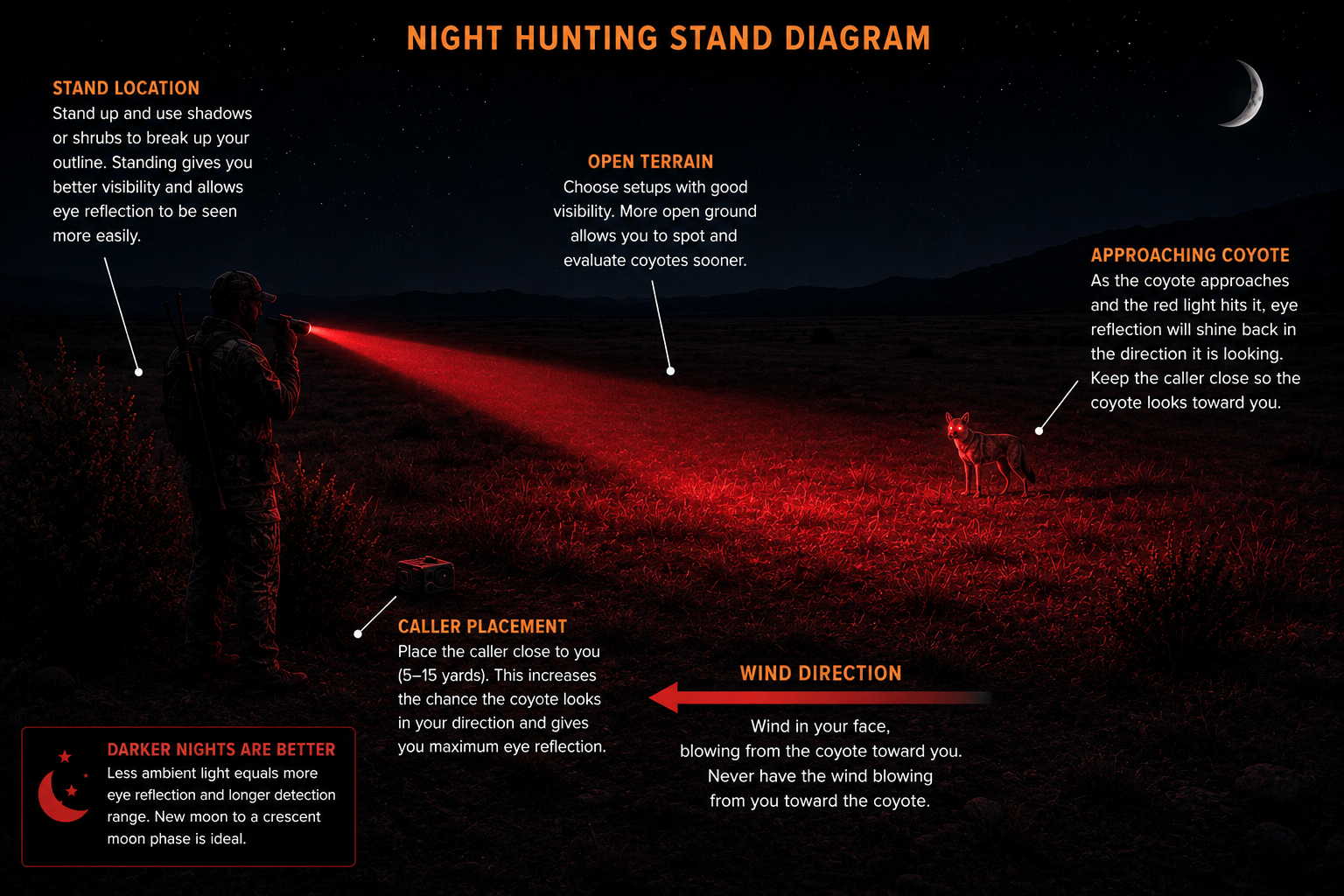
Night hunting stand setups differ significantly from daytime setups. Visibility, eye reflection, and scanning efficiency become far more important after dark.
Stand Instead Of Sit
Standing improves visibility and allows better eye reflection when using predator hunting lights .
Keep The Caller Close
Place the caller close to your position so approaching coyotes continue looking toward you, maximizing visible eye reflection.
Open Terrain Helps
More open terrain allows better scanning, longer visibility, and faster predator identification.
Darker Nights Are Better
New moon to crescent moon conditions often provide stronger eye reflection and allow coyotes to approach more confidently.
Common Stand Setup Mistakes
- Setting up with the wind at your back
- Ignoring downwind approach routes
- Calling where visibility is too limited
- Allowing coyotes into your scent cone too quickly
- Placing the caller too far away at night
- Sitting skyline exposed
Poor stand setup ruins more predator hunts than bad calling. Consistent success comes from controlling wind direction, visibility, and likely coyote movement before the stand even begins.
Related Predator Hunting Guides
How To Call Coyotes At Night
Learn scanning techniques, light positioning, and nighttime predator calling strategies.
Read GuideCoyote Hunting 101
Learn the fundamentals of coyote calling, stand setup, and predator hunting basics.
Read GuideBest Predator Hunting Lights
Compare beam colors, scanning lights, and long-range hunting setups.
Explore LightsWhat Sounds to Play and When To Play Them
Learn how distress sounds and coyote vocals influence predator behavior.
Read GuideStand Setup & Wind FAQ
Generally yes. Wind blowing from the coyote toward the hunter helps prevent predators from reaching your scent cone too quickly.
Coyotes rely heavily on scent confirmation before fully committing to prey distress sounds.
At night, callers are usually placed closer to the hunter to keep approaching coyotes looking toward the light source.
Open terrain generally improves visibility, scanning distance, and predator identification.