
Coyote Hunting By Season
The Annual Coyote Behavior Calendar
Understanding how coyote behavior changes throughout the year is one of the fastest ways to become a more successful predator hunter. This guide explains what motivates coyotes during each season, the best sounds to use, recommended equipment, and when to adjust your calling strategy. Explore the complete annual behavior cycle, then dive deeper into each season with our detailed hunting guides.
What Is The Best Time Of Year To Hunt Coyotes?
Every season can produce excellent coyote hunting, but the reasons coyotes respond to calls change dramatically throughout the year. Early season focuses on hunger and curiosity, winter emphasizes survival, breeding season is driven by territorial and reproductive instincts, pup season revolves around family protection, and summer is defined by learning, exploration, and growing independence. Hunters who match their sounds and tactics to these seasonal behaviors consistently outperform those using the same calling strategy year-round.
- Early Season — Hunger & Curiosity
- Winter — Survival & Food
- Breeding Season — Territory & Reproduction
- Pup Season — Family Protection
- Summer — Learning & Exploration
Think of this page as your annual roadmap for coyote hunting. Each season links to an in-depth guide explaining behavior, calling strategies, sound selection, equipment, weather, and advanced hunting tactics for that time of year.
Annual Coyote Hunting Strategy Dashboard
Before choosing your calls, it's important to understand why coyotes are responding. Their primary motivations shift throughout the year, and successful hunters adjust their strategy accordingly.
Early Season
Behavior
Food & Curiosity
Best Sounds
Rabbit Distress
Rodent Distress
Winter
Behavior
Survival
Best Sounds
Rabbit Distress
Coyote Howls
Breeding Season
Behavior
Territory & Reproduction
Best Sounds
Howls
Female Vocalizations
Pup Season
Behavior
Family Protection
Best Sounds
Pup Distress
Adult Distress
Summer
Behavior
Learning & Exploration
Best Sounds
Rabbit Distress
Rodent Distress
Bird Distress
Annual Coyote Behavior Calendar
Rather than viewing coyote hunting as a collection of unrelated seasons, think of it as one continuous behavioral cycle. Understanding where coyotes are in that cycle helps explain why certain sounds become more or less effective throughout the year.
| Typical Time Of Year* | Primary Behavior | Best Guide |
|---|---|---|
| Late Summer / Fall | Food & Curiosity | Early Season → |
| Late Fall / Winter | Survival | Winter → |
| Mid-Winter | Territory & Reproduction | Breeding Season → |
| Spring | Family Protection | Pup Season → |
| Early / Mid Summer | Learning & Exploration | Summer → |
*Behavioral timing varies across North America depending on latitude, elevation, weather patterns, prey availability, and local coyote populations. Use this calendar as a behavioral framework rather than fixed calendar dates.
The Annual Coyote Behavior Cycle
Successful predator hunters don't think in isolated seasons—they think in annual behavior cycles. As coyotes move from learning, to hunting, to surviving, to breeding, and finally to raising pups, their motivations continually change. Understanding this cycle allows you to choose the right sounds, equipment, and hunting strategy for every stage of the year.
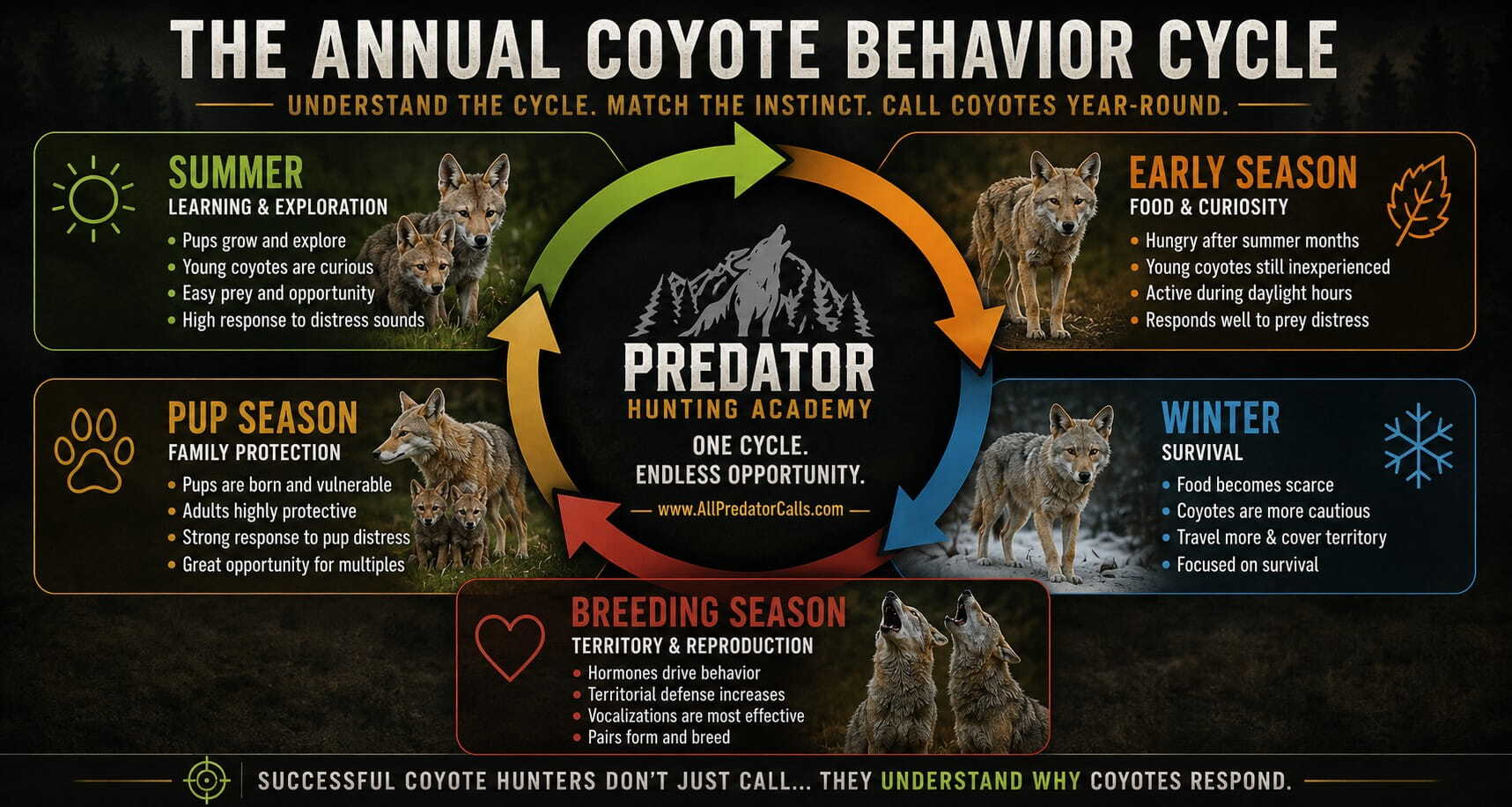
Every successful coyote hunting strategy begins by asking one question: "What instinct is driving coyotes today?" Once you identify that motivation—whether it's hunger, survival, territoriality, family protection, or curiosity—the right calling sequence often becomes much easier to choose.
Understanding The Annual Coyote Behavior Cycle
One of the biggest mistakes new predator hunters make is using the same calling strategy throughout the year. Coyotes don't think the same way every month, so hunters shouldn't expect them to respond to the same sounds for the same reasons. Successful predator hunters learn to identify what motivates coyotes during each stage of the year and then match their calling strategy to those natural instincts.
Rather than viewing each season as a separate event, think of coyote behavior as one continuous cycle. Each season naturally prepares coyotes for the next, creating predictable behavioral changes that hunters can use to their advantage.
Summer
Learning & Exploration
Young coyotes develop hunting skills while expanding beyond the den.
↓
Independence
Early Season
Food & Curiosity
Newly independent coyotes begin hunting for themselves.
↓
Survival
Winter
Food & Survival
Cold weather and limited food increase feeding activity.
↓
Pair Formation
Breeding Season
Territory & Reproduction
Vocalizations become increasingly important.
↓
Family Protection
Pup Season
Protection & Den Defense
Adult coyotes aggressively protect their young.
↓
Learning Begins Again
Great predator callers don't simply memorize sounds—they understand why coyotes respond. Every successful stand begins by identifying what instinct is driving coyote behavior that day, then selecting sounds that naturally appeal to that motivation.
Seasonal Timing Varies Across North America
While coyotes follow the same annual life cycle throughout North America, the exact timing of each behavioral stage varies depending on latitude, elevation, weather patterns, prey availability, and local environmental conditions. Hunters in northern climates often experience later breeding, denning, and pup development than hunters in southern regions.
For that reason, this guide focuses on behavior rather than specific calendar dates. Learn to recognize what coyotes are doing instead of relying solely on the month shown on your calendar.
| Factor | Effect On Seasonal Timing |
|---|---|
| Latitude | Northern populations generally transition later. |
| Elevation | Higher elevations often delay seasonal behavior. |
| Weather | Severe winters and mild springs can shift activity. |
| Food Availability | Abundant prey influences movement and development. |
| Local Populations | Individual family groups may progress differently. |
The Five Instincts That Drive Coyote Behavior
Every successful calling strategy ultimately appeals to one or more natural instincts. Understanding these motivations helps explain why certain sounds become dramatically more effective during specific times of the year.
| Season | Primary Instinct | Typical Calling Strategy |
|---|---|---|
| Early Season | Hunger & Curiosity | Prey distress sounds |
| Winter | Survival | Food-focused calling with occasional vocalizations |
| Breeding Season | Territory & Reproduction | Howls and breeding vocalizations |
| Pup Season | Family Protection | Pup distress and adult distress |
| Summer | Learning & Exploration | Variety of prey distress sounds |
Learn The Behavior Behind Successful Hunting
Hunting tactics become much more effective when you understand the biology and behavior driving them. These companion guides explain why coyotes respond differently throughout the year and complement the seasonal hunting strategies covered in this guide.
Coyote Behavior Guide
Learn how coyotes communicate, establish territories, interact with family groups, and adapt throughout the year.
Explore Guide →Coyote Breeding Season
Understand the biological changes behind breeding vocalizations, territorial behavior, and pair bonding.
Coming SoonCoyote Denning Behavior
Learn how den selection, pup development, and parental behavior influence spring and early summer hunting.
Coming SoonCompare Every Coyote Hunting Season
Every season offers unique advantages. Rather than asking which season is "best," experienced hunters ask which season best matches the behavior they're trying to capitalize on.
| Category | Early | Winter | Breeding | Pup | Summer |
|---|---|---|---|---|---|
| Primary Motivation | Hunger | Survival | Territory | Protection | Learning |
| Best Sounds | Rabbit, Rodent | Rabbit, Howls | Vocalizations | Pup Distress | Rabbit, Rodent, Bird |
| Difficulty | ★★★☆☆ | ★★★★☆ | ★★★★★ | ★★★★☆ | ★★☆☆☆ |
| Best For | All Hunters | Experienced | Advanced Calling | Aggressive Responses | Beginners |
Which Season Should You Hunt?
Every season offers unique opportunities. Whether you're a new predator hunter looking for fast action or an experienced caller interested in advanced vocalization strategies, this guide will help you choose the best season for your goals.
New Predator Hunters
Begin with Summer or Early Season when young coyotes are naturally curious and prey distress sounds produce consistent results.
Experienced Callers
Winter and Breeding Season reward hunters who understand advanced coyote vocalizations and seasonal behavior.
Fast, Aggressive Responses
Pup Season often produces some of the quickest reactions of the year by appealing to strong parental instincts.
Year-Round Success
Understanding every season allows you to adapt your strategy instead of relying on the same sounds throughout the year.
Explore The Complete Seasonal Hunting Series
Each season below includes a comprehensive guide covering coyote behavior, sound selection, equipment recommendations, weather considerations, hunting tactics, and advanced calling strategies specific to that stage of the annual behavior cycle.
Early Season
Focus on hunger, curiosity, prey distress, and newly independent coyotes.
Best Sounds
Rabbit Distress
Rodent Distress
Winter
Learn how cold weather and food shortages influence coyote movement and calling success.
Best Sounds
Rabbit Distress
Coyote Howls
Breeding Season
Master territorial behavior, breeding vocalizations, challenge howls, and female vocalizations.
Best Sounds
Challenge Howls
Female Vocalizations
Pup Season
Learn how family protection instincts create some of the fastest responses of the year.
Best Sounds
Pup Distress
Adult Distress
Summer
Understand how curiosity and learning create unique opportunities for predator callers.
Best Sounds
Rabbit Distress
Rodent & Bird Distress
Annual Sound Selection Calendar
No sound works equally well every day of the year. Matching your sounds to seasonal coyote behavior dramatically increases your odds of success. The chart below summarizes when each calling sound tends to be most effective.
| Sound | Early | Winter | Breeding | Pup | Summer |
|---|---|---|---|---|---|
| Rabbit Distress | ★★★★★ | ★★★★★ | ★★★☆☆ | ★★☆☆☆ | ★★★★★ |
| Rodent Distress | ★★★★★ | ★★★★☆ | ★★★☆☆ | ★★☆☆☆ | ★★★★★ |
| Bird Distress | ★★★★☆ | ★★★☆☆ | ★★☆☆☆ | ★★★☆☆ | ★★★★☆ |
| Fawn Distress | ★★☆☆☆ | ★☆☆☆☆ | ★☆☆☆☆ | ★★★★★ | ★★★★☆ |
| Pup Distress | ★★★☆☆ | ★★★★☆ | ★★★★☆ | ★★★★★ | ★★★★☆ |
| Coyote Vocalizations | ★★☆☆☆ | ★★★★☆ | ★★★★★ | ★★★☆☆ | ★★★☆☆ |
Annual Equipment Calendar
While quality equipment works year-round, some categories become particularly valuable during certain seasons depending on coyote behavior and hunting conditions.
Electronic Calls
Useful throughout the year, especially during breeding and pup season when advanced vocalizations become more important.
Shop Electronic Calls →Mouth Calls
Lightweight, versatile, and ideal for hunters who enjoy complete control over every calling sequence.
Shop Coyote Calls →Custom FOXPRO Programming
Carry a complete annual sound library including prey distress, breeding vocalizations, den defense sounds, and seasonal calling sequences.
Learn More →Predator Decoys
Add visual realism during any season and help divert a coyote's attention away from the hunter.
Shop Decoys →Weather & Environmental Calendar
Weather doesn't just affect hunters—it changes coyote behavior. Understanding seasonal environmental conditions helps you know when to hunt, where to set up, and which sounds are most likely to succeed.
| Season | Typical Conditions | Hunter Focus |
|---|---|---|
| Early Season | Mild temperatures | Food sources & travel corridors |
| Winter | Cold, snow, food scarcity | Survival behavior |
| Breeding | Variable winter conditions | Territory & vocalizations |
| Pup Season | Warming temperatures | Family protection |
| Summer | Heat & dry conditions | Dawn, dusk & curiosity |
Annual Coyote Hunting Opportunity Calendar
Every season offers different opportunities depending on your experience level, calling style, and hunting goals. Rather than asking which season is "best," consider which season best fits the type of hunting experience you're looking for.
| Season | Beginner Friendly | Calling Difficulty | Vocalization Focus | Multiple Coyotes |
|---|---|---|---|---|
| Early Season | ★★★★★ | ★★☆☆☆ | ★☆☆☆☆ | ★★★☆☆ |
| Winter | ★★★☆☆ | ★★★★☆ | ★★★☆☆ | ★★☆☆☆ |
| Breeding | ★★☆☆☆ | ★★★★★ | ★★★★★ | ★☆☆☆☆ |
| Pup Season | ★★★★☆ | ★★★☆☆ | ★★★★☆ | ★★★★★ |
| Summer | ★★★★★ | ★★☆☆☆ | ★★☆☆☆ | ★★★★★ |
Common Seasonal Hunting Mistakes
Using The Same Sounds Year-Round
Coyotes respond to different sounds for different reasons throughout the year. Adjust your calling to match seasonal behavior.
Ignoring Behavioral Changes
Understanding what motivates coyotes is often more important than memorizing a calling sequence.
Hunting The Calendar
Focus on what coyotes are doing instead of relying on exact calendar dates. Weather and geography influence seasonal timing.
Never Changing Strategy
Successful hunters continuously adapt their sounds, setups, and expectations throughout the year.
The Annual Cycle Never Stops
One season naturally leads into the next. Young coyotes mature into independent hunters. Food scarcity shifts attention toward survival. Survival transitions into breeding, breeding leads to pups, and family groups eventually raise another generation of curious young coyotes. Understanding this continuous cycle allows hunters to anticipate behavior rather than simply react to it.
Summer
Learning
→
Early Season
→
Winter
→
Breeding
→
Pup Season
→
Summer Again
The best predator hunters don't simply choose sounds—they understand why coyotes respond. When you recognize which instinct is driving coyote behavior, choosing the right sounds, equipment, and hunting strategy becomes much more intuitive.
Recommended Coyote Hunting Equipment
Electronic Calls
Shop Electronic Calls →Coyote Calls
Shop Mouth Calls →Rabbit Distress
Shop Rabbit Calls →Coyote Howlers
Shop Howlers →Pup Distress
Shop Pup Distress →Custom FOXPRO Programming
Learn More →Continue Your Predator Hunting Education
Seasonal hunting is only one part of becoming a successful predator hunter. Continue building your knowledge by exploring the complete Coyote Hunting Guide within the Predator Hunting Academy.
Ready to learn more? Visit the Coyote Hunting Guide to explore beginner guides, calling techniques, stand strategy, equipment, behavior, night hunting, advanced tactics, and much more.
Coyote Hunting By Season FAQ
Choosing the right season is one of the biggest factors in successful predator hunting. The frequently asked questions below explain seasonal behavior, sound selection, hunting strategies, equipment recommendations, weather influences, and how to adapt your calling throughout the annual coyote behavior cycle.
Coyote hunting by season is the practice of adjusting your calling strategy, sounds, stand setup, and overall hunting approach to match the natural behavioral changes coyotes experience throughout the year. Rather than using the same tactics year-round, successful hunters adapt to the instincts that are driving coyotes during each season.
Coyote behavior changes as their biological priorities change. Hunger, survival, breeding, raising pups, and teaching young coyotes all occur at different times of the year. Because their motivations change, the sounds and calling strategies that trigger a response also change.
Every season offers unique advantages. Early Season and Summer are often excellent for beginners because young coyotes tend to be more curious, while Winter, Breeding Season, and Pup Season often reward hunters who understand advanced calling techniques and seasonal coyote behavior.
Seasonal weather, food availability, breeding cycles, pup development, territorial behavior, and changing family dynamics all influence how coyotes behave. Understanding these natural changes allows hunters to predict how coyotes are likely to respond before making a stand.
Understanding behavior helps explain why coyotes respond—not just how to call them. When you know what motivates coyotes during each season, choosing sounds, stand locations, and calling sequences becomes much easier and far more consistent.
The overall behavior cycle remains remarkably consistent, but the exact timing can shift depending on weather, geography, elevation, prey availability, and local coyote populations. Hunters should learn to recognize behavior rather than relying solely on calendar dates.
Summer and Early Season are often excellent starting points because many young coyotes are naturally curious and still learning to hunt. Simple prey distress calling sequences can produce outstanding results while helping new hunters develop confidence and calling skills.
Breeding Season is generally considered the most technically challenging because successful hunters must understand coyote vocalizations, territorial behavior, breeding biology, and how to use those instincts to their advantage. When done correctly, however, it can also be one of the most rewarding times of the year.
Pup Season frequently produces some of the quickest and most aggressive responses because adult coyotes are highly motivated to protect their pups. Pup distress sounds can trigger immediate defensive reactions from nearby adults.
Your calling strategy should evolve with coyote behavior. Early Season and Summer typically emphasize prey distress sounds, Winter focuses on food and survival, Breeding Season shifts toward territorial vocalizations, and Pup Season relies heavily on protective instincts and pup distress sounds. Matching your calling strategy to seasonal behavior consistently produces better results than relying on the same sequence year-round.
Yes. While some sounds, such as rabbit distress, remain productive throughout the year, others become much more effective during specific seasons. Challenge howls, female breeding vocalizations, pup distress, bird distress, fawn distress, and Ki-Yi sounds all have times when they naturally excel.
Absolutely. Rabbit distress remains one of the most dependable predator calling sounds available and can produce coyotes during every season. However, combining rabbit distress with seasonal sounds often creates more realistic and effective calling sequences.
Coyote vocalizations become increasingly important during Winter and especially Breeding Season when territory and reproduction dominate coyote behavior. During Summer and Early Season, prey distress sounds generally remain the primary calling strategy, although vocalizations can still be effective in certain situations.
Although pup distress is most closely associated with spring and early summer, it remains effective throughout the year. Many hunters finish nearly every stand with pup distress or use it as a Ki-Yi sound after firing a shot to encourage hesitant coyotes to stop, return, or attract additional coyotes that may still be nearby.
Yes. Electronic callers allow hunters to instantly switch between prey distress, breeding vocalizations, pup distress, bird distress, fawn distress, Ki-Yi sounds, and many other recordings as coyote behavior changes throughout the year. This flexibility makes electronic callers valuable during every season.
Every season emphasizes different sounds. Custom FOXPRO Programming allows hunters to build one organized sound library containing seasonal prey distress, breeding vocalizations, female sounds, pup distress, Ki-Yi, den-defense sounds, bird distress, and many other specialized recordings that may not come preloaded on standard electronic callers.
Most core equipment remains the same throughout the year, but your emphasis may change. Breeding Season often favors electronic callers with extensive vocalization libraries, while Winter may place greater importance on cold-weather gear and Summer often requires lightweight equipment, hydration, and insect protection.
Weather influences coyote movement during every season. Snow can concentrate coyotes around food sources, extreme summer heat often shifts activity toward dawn and dusk, while wind, storms, temperature changes, and barometric pressure may all affect daily movement and calling success.
Night hunting can be productive throughout the year, but seasonal coyote behavior still determines which sounds and strategies are most effective. Summer often provides excellent nighttime opportunities because cooler temperatures increase coyote movement, while Winter and Breeding Season can also produce outstanding results with the appropriate calling techniques where night hunting is legal.
No. Although coyotes experience the same annual life cycle, the timing of breeding, denning, pup development, and seasonal behavior varies by latitude, elevation, climate, and local prey availability. Hunters should learn to recognize behavioral changes instead of relying solely on calendar dates.
Wildlife doesn't follow a calendar as precisely as people do. Weather patterns, harsh winters, mild springs, drought, food availability, and regional differences can all accelerate or delay seasonal behavior. The Annual Coyote Behavior Calendar is intended as a behavioral framework rather than an exact schedule.
No. Regulations vary significantly by state and may include different hunting seasons, licensing requirements, legal equipment, public land rules, electronic caller regulations, suppressor laws, thermal optics restrictions, night hunting rules, and other considerations. Always review your state's current regulations before hunting.
Visit our State Predator Hunting Laws Guide for links to every state's official wildlife agency and the latest predator hunting regulations.
Start by reading the seasonal guide that matches the time of year you're currently hunting. Then continue building your knowledge with our guides on coyote calling sequences, vocalization strategies, stand setup and wind strategy, night hunting, and coyote behavior. For the complete learning roadmap, visit the Coyote Hunting Guide within the Predator Hunting Academy.