
Calling Open Country Coyotes
Learn how to successfully call coyotes in open country using proper stand setup, wind management, long-range visibility, terrain positioning, subtle movement control, and advanced predator calling tactics for wide-open terrain.
How Do You Call Coyotes In Open Country?
Open country coyote hunting requires longer visibility, smarter terrain positioning, excellent wind discipline, and more careful movement control than hunting thicker cover. Coyotes in open terrain often spot hunters from long distances, making stand setup extremely important.
- Use terrain features to break up your outline
- Prioritize long-range visibility
- Watch downwind aggressively
- Minimize movement during the stand
- Expect coyotes to approach cautiously in open terrain
Hunters using predator calls in open country often rely heavily on terrain folds, low-profile setups, wind management, and careful scanning to avoid getting detected by approaching coyotes.
In open country, coyotes often see movement long before hunters see them. Staying still and using terrain properly is critical.
Why Open Country Coyote Hunting Is Different
Wide-open terrain changes how coyotes travel, approach calls, use wind, and detect danger. Open-country predators often rely heavily on visibility and can detect movement from significant distances.
Coyotes Can See Farther
Open terrain allows predators to spot movement, silhouettes, and unnatural shapes from long distances.
Wind Becomes More Important
Wide-open country often creates unpredictable wind patterns and larger scent cones.
Visibility Helps Hunters Too
Hunters can often spot approaching coyotes sooner, allowing more time to prepare for shots.
Terrain Features Matter
Small ridges, washes, grass lines, brush patches, and terrain folds become extremely valuable.
Best Stand Setup For Open Country Coyotes
Open-country stand setups should prioritize visibility, concealment, wind control, and predictable coyote approach routes. Hunters who skyline themselves or ignore wind direction are often detected before ever seeing a predator.
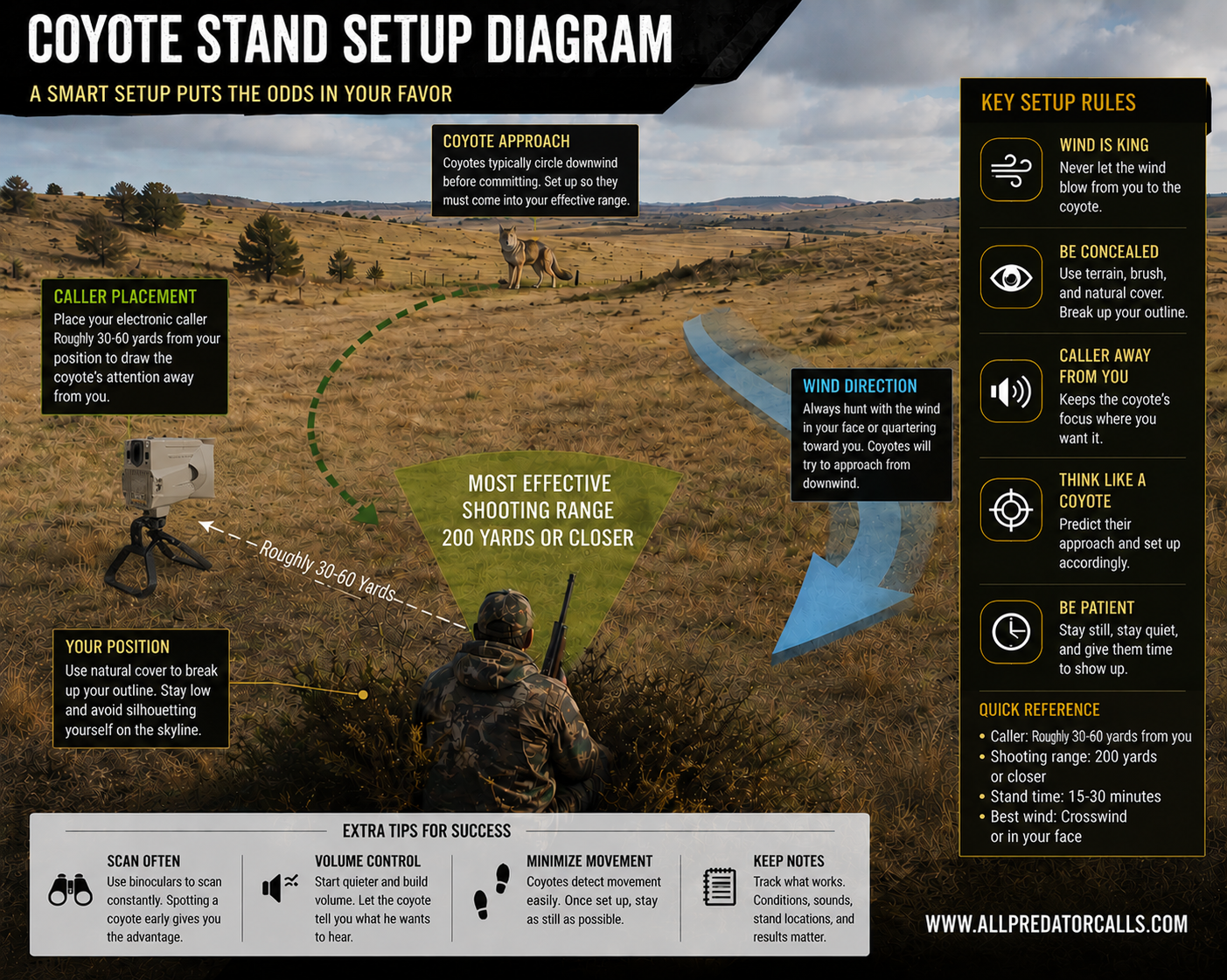
Avoid Skyline Exposure
Use terrain folds, brush, grass, and shadows to break up your outline.
Watch Downwind
Coyotes frequently attempt to circle downwind before fully committing to the call.
Use Elevation Carefully
Small elevation changes improve visibility, but excessive skyline exposure can get hunters detected.
Plan Shooting Lanes
Open country often creates longer shot opportunities, making visibility and positioning extremely important.
Coyotes in open country often detect movement instantly. Keeping movement slow and minimal is critical for success.
Calling Strategy For Open Terrain
Calling strategy in open country often differs from thick cover hunting. Predators may take longer to approach because they can evaluate danger from farther away before committing.
Start Softer
Starting at lower volume prevents nearby coyotes from getting startled immediately.
Use Realistic Pauses
Natural pauses make calling sequences sound more realistic and less mechanical.
Stay Alert Longer
Coyotes in open terrain may approach cautiously and stop frequently to observe the stand.
Use Visual Focus Points
Callers and decoys can help focus predator attention away from the hunter.
Many hunters use predator mouth calls because they create natural variation and realistic sound emotion that pressured coyotes often trust more. However, the right electronic calls can provide better volume output while maintinaing clarity, which can be beneficial for open country calling (especially in the wind and cold).
Common Open Country Coyote Hunting Mistakes
- Skylining yourself on ridges
- Moving too much on stand
- Ignoring wind direction
- Setting up without terrain concealment
- Calling too loudly immediately
- Failing to watch long downwind approach routes
Open-country coyotes often force hunters to become more disciplined with stand setup, movement control, and terrain positioning.
Related Predator Hunting Guides
Stand Setup & Wind Strategy
Learn how to position predator hunting stands and avoid getting busted downwind.
Read GuideHunting Pressured Coyotes
Learn advanced tactics for hunting cautious and educated predators.
Read GuideHow Long To Stay On Stand
Learn how stand duration changes based on terrain, species, pressure, and hunting conditions.
Read GuidePredator Calls
Browse predator mouth calls, distress calls, squeakers, and coyote vocalization calls.
Shop CallsOpen Country Coyote Hunting FAQ
Coyotes in open terrain rely heavily on visibility, wind, and terrain observation to detect danger.
Yes. Coyotes can often detect movement from significant distances in open terrain.
Starting softer is often better because nearby coyotes may already be within hearing distance.
Yes. Many hunters prefer mouth calls because they create realistic sound variation and emotion.