
Red Fox Stand Setup & Wind Strategy
Learn how to choose stand locations, manage wind direction, approach hunting areas undetected, position callers and decoys, and create effective red fox setups for both daytime and nighttime hunting.
What Is The Best Stand Setup For Red Fox?
The best red fox stand setups typically use crosswinds, conceal the hunter, provide clear shooting lanes, position electronic callers away from the shooter, and allow visibility into likely travel corridors while minimizing the chance of being detected.
- Use crosswinds whenever possible.
- Approach stands without alerting foxes.
- Watch cover edges and travel routes.
- Place callers away from the shooter.
- Use decoys to focus attention.
- Maintain visibility into likely approach routes.
While red foxes often use scent less aggressively than coyotes, proper wind management still plays an important role in stand success.
Why Stand Setup Matters More Than Calling
Many hunters spend considerable time focusing on sounds while overlooking stand setup. In reality, even the best calling sequence cannot overcome poor positioning.
Proper setup influences:
- Whether foxes hear the call.
- Whether foxes detect the hunter.
- How foxes approach.
- Shot opportunities.
- Response distance.
- Overall stand success.
Before selecting sounds, hunters should first determine where a fox is likely to approach from and how to intercept that movement.
How Red Fox Use The Wind Compared To Coyotes
One of the biggest mistakes hunters make is assuming foxes behave exactly like coyotes around a call.
| Behavior | Red Fox | Coyote |
|---|---|---|
| Downwind Circling | Moderate | Common |
| Reliance On Sight | High | Moderate |
| Reliance On Scent | Moderate | Very High |
| Direct Commitment | Common | Less Common |
Red foxes still use their nose, but they frequently commit more directly toward sounds than coyotes, making visibility and shooting lane management especially important.
Understanding Wind Direction
Wind influences how sound travels, how scent disperses, and how predators approach a stand. Successful fox hunters constantly monitor wind conditions before selecting a location.
Whenever possible:
- Avoid having wind directly at your back.
- Avoid allowing foxes to approach completely downwind.
- Use terrain to influence approach routes.
- Force foxes into visible shooting lanes.
Why Crosswind Setups Work So Well
Crosswind setups consistently rank among the most productive stand configurations for predator hunting because they provide visibility into both the caller and likely downwind areas.
Crosswinds often allow hunters to intercept foxes before they reach the caller while still maintaining visibility into areas where scent-checking behavior may occur.
Learn more in Crosswind Ambush Setups .
Choosing The Right Stand Location
Red foxes often use habitat edges, brush lines, creek bottoms, field corners, hedgerows, and travel corridors.
Productive stand locations commonly overlook:
- Field-to-cover transitions.
- Brushy draws.
- Creek corridors.
- Pasture edges.
- Fence rows.
- Small openings near dense cover.
Related guides:
Approach Routes & Stand Entry
Many stands fail before calling ever begins because predators are alerted during the approach.
When entering a stand:
- Stay out of visible openings when possible.
- Use terrain for concealment.
- Minimize skyline exposure.
- Keep noise to a minimum.
- Avoid contaminating likely approach routes.
The goal is to arrive undetected and allow the stand to begin with minimal disturbance.
Electronic Caller Placement
Electronic callers help move attention away from the hunter and toward the sound source.
A common setup places the caller:
- 20-50 yards from the shooter.
- Upwind or crosswind.
- Within visible shooting lanes.
- Near a decoy when possible.
Learn more in:
Decoy Placement
Red foxes are highly visual predators and often respond well to movement. Decoys can dramatically increase commitment by providing visual confirmation of what the fox expects to find.
Most decoys work best when placed:
- Near the caller.
- Within clear visibility.
- Inside shooting lanes.
- Far enough from the hunter to divert attention.
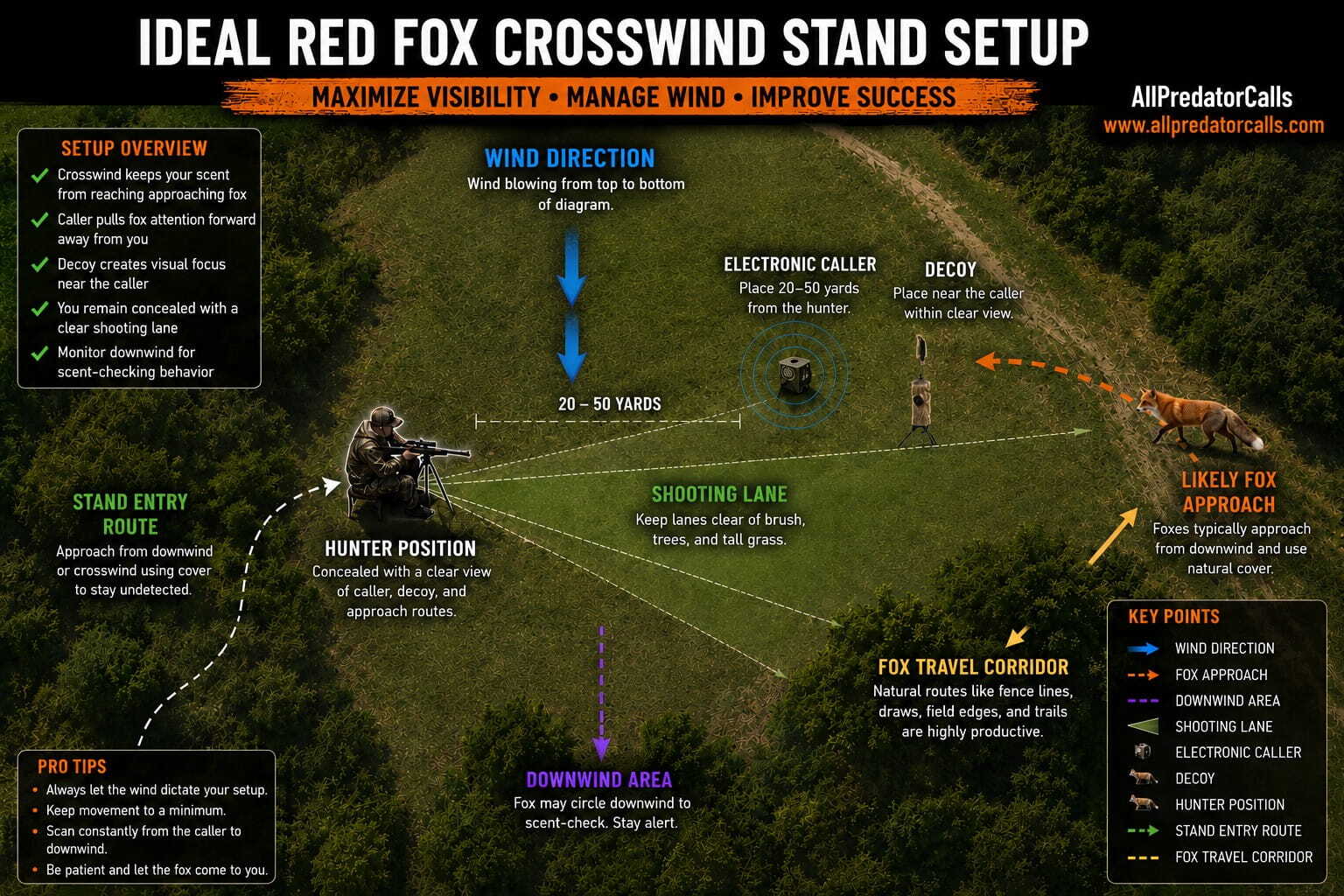
Ideal Red Fox Crosswind Stand Setup Diagram
The diagram below illustrates a highly effective red fox crosswind stand setup, including hunter position, caller placement, decoy location, wind direction, likely fox travel routes, and primary shooting lanes.
Daytime Red Fox Stand Setup Strategies
Daytime red fox hunting often emphasizes visibility, concealment, and efficient shooting positions. Because red foxes frequently rely heavily on vision, hunters should carefully manage movement and avoid exposing themselves unnecessarily.
Effective daytime setups often include:
- Natural back cover.
- Clear shooting lanes.
- Visibility into likely travel corridors.
- Crosswind positioning.
- Minimal movement during calling sequences.
Comfortable Seats & Stools can significantly improve comfort and reduce unnecessary movement during longer stands.
Night Hunting Stand Setup Strategies
Night hunting introduces additional considerations including scanning visibility, target identification, shooting support, and equipment placement.
Night hunters should focus on:
- Visibility into likely approach routes.
- Safe shooting lanes.
- Effective scanning coverage.
- Minimizing equipment movement.
- Maintaining awareness of wind direction.
Proper setup becomes even more important at night because many opportunities develop quickly and visibility is limited.
Red Fox Stand Setups For Hunting Lights
When using Predator Hunting Lights , stand placement should maximize visibility while minimizing the likelihood of being detected.
Successful setups often allow hunters to:
- Scan likely travel corridors.
- Maintain constant visual contact.
- Identify approaching animals early.
- Transition smoothly to shooting.
Red foxes are often highly responsive to visual stimuli, making consistent scanning particularly important.
Red Fox Stand Setups For Night Vision
Night vision equipment allows hunters to monitor large areas while remaining concealed. Effective stand setups often provide broad fields of view while maintaining access to likely travel routes.
Quality infrared illumination can improve image clarity, target identification, and overall performance.
Learn more in:
Red Fox Stand Setups For Thermal Hunting
Thermal optics excel at locating animals but hunters must still carefully consider shooting lanes, stand placement, and approach routes.
Many thermal hunters prefer elevated visibility and open terrain where approaching foxes can be detected early.
Learn more in:
Tripods vs Shooting Sticks For Red Fox Hunting
Both tripods and shooting sticks can be highly effective depending on hunting style and terrain.
| Equipment | Best Use |
|---|---|
| Shooting Sticks | Daytime seated hunting |
| Tripods | Night hunting and standing shots |
Explore:
Common Red Fox Stand Setup Mistakes
- Ignoring wind direction.
- Poor stand entry routes.
- Caller placement that limits shooting opportunities.
- Insufficient visibility.
- Too much movement.
- Overlooking likely travel corridors.
- Failing to prepare shooting lanes.
Eliminating these mistakes often improves success more than changing sounds or equipment.
Recommended Red Fox Hunting Gear
Fox Calls
Shop Fox CallsElectronic Calls
Shop Electronic CallsPredator Decoys
Shop Predator DecoysSeats & Stools
Shop Seats & StoolsShooting Sticks & Tripods
Shop Shooting SupportsCustom FOXPROs
Explore Custom FOXPROsRed Fox Stand Setup & Wind Strategy FAQ
Crosswinds are often the most effective because they allow hunters to monitor likely approach routes while reducing the chance of being detected.
Crosswinds are generally preferred because they provide better visibility into likely approach routes while reducing the chance of a fox detecting human scent before reaching shooting range. Crosswind setups also allow hunters to monitor both the caller and likely downwind areas where scent-checking behavior may occur.
Red fox may use the wind, but they often commit more directly than coyotes and generally rely more heavily on vision.
A common setup places the caller approximately 20 to 50 yards from the shooter depending on terrain and visibility.
Most decoys perform best when placed near the caller and within clear shooting lanes where approaching foxes can easily see them.
Stand entry is critical because foxes may detect hunters before calling begins if approach routes are poorly planned.
Shooting sticks are often preferred for daytime seated hunting while tripods excel for standing night hunting setups.
Yes. Poor visibility, bad wind positioning, excessive movement, and improper caller placement can all reduce hunting success.