
How To Scout For Red Fox
Learn how to find red fox by identifying habitat, tracks, scat, food sources, den locations, travel routes, rabbit concentrations, thermal observations, and other signs that reveal where fox spend their time before you ever make a stand.
What Is The Best Way To Scout For Red Fox?
The best way to scout for red fox is to identify quality habitat, locate prey-rich areas, look for tracks and scat, find travel corridors connecting feeding and bedding areas, and confirm activity through observation, trail cameras, or thermal scouting.
- Focus on rabbit and rodent habitat
- Look for field edges and transition zones
- Locate brush piles and small woodlots
- Identify fresh tracks and scat
- Use thermal optics to confirm activity
- Turn scouting information into productive stand locations
Successful fox hunters rarely hunt random locations. The most productive hunters consistently target areas where scouting has already confirmed fox activity.
Red fox typically use smaller home ranges than coyotes, making detailed scouting even more valuable.
Why Scouting Matters For Red Fox Hunting
Fox hunting success often depends more on finding foxes than on choosing the perfect sound. Even the best predator calls cannot consistently produce results if foxes are not present.
Effective scouting helps hunters:
- Locate active fox populations
- Identify productive stand locations
- Understand feeding patterns
- Find travel routes and denning areas
- Reduce wasted stands
- Increase calling success rates
Once foxes are located, hunters can apply effective calling techniques from guides such as Red Fox Hunting 101 and eventually How To Call Red Fox .
Understanding Red Fox Habitat
One of the biggest mistakes hunters make is scouting foxes the same way they scout coyotes. While both species are canines, red fox often prefer different habitat features and generally occupy smaller territories.
Agricultural Areas
Crop fields and pasture ground often support abundant prey populations that attract fox.
Small Woodlots
Fox frequently use isolated woodlots as daytime security cover.
Brushy Edges
Thick edge habitat often provides excellent travel routes and hunting opportunities.
Farm Country
Farms often provide food, cover, and ideal denning locations.
Red fox often concentrate around relatively small habitat features that many coyote hunters would overlook.
Identifying Red Fox Tracks
Tracks remain one of the most reliable signs of fox activity. Fox tracks are generally smaller and more delicate than coyote tracks, with a narrow, efficient appearance.
Smaller Than Coyotes
Fox tracks are noticeably smaller than most coyote tracks.
Direct Travel
Fox frequently travel in straight lines between feeding and bedding areas.
Snow Tracking
Fresh snow often provides exceptional opportunities to locate fox activity.
Crossing Points
Repeated tracks often reveal travel corridors worth hunting.
Using Scat To Locate Red Fox
Fox scat frequently appears near travel routes, field edges, intersections, and prominent features used for territorial communication.
Examining scat often reveals valuable clues about local food sources, including rodents, rabbits, insects, berries, and other seasonal foods.
Territorial Marking
Fox often leave scat in visible locations to communicate with other fox.
Food Source Clues
Hair, bones, and other remains reveal what foxes are feeding on locally.
Active Travel Routes
Fresh scat often confirms current fox activity.
Repeat Locations
Multiple deposits often indicate heavily used areas.
Locating Fox Through Vocalizations
Although fox vocalize less frequently than coyotes, listening can still provide valuable scouting information.
During breeding season, fox vocalizations become more common and can help hunters identify active territories.
Winter Activity
Fox become more vocal during breeding season.
Territorial Areas
Repeated vocalizations often indicate active territories.
Dawn & Dusk
These periods often provide the best opportunities to hear fox activity.
Supplemental Tool
Vocalizations work best when combined with other scouting methods.
Focus On Field Edges & Transition Zones
Field edges are some of the most productive places to scout for red fox. These transition zones often concentrate prey while providing cover, making them natural hunting routes.
Crop Field Edges
Excellent locations for hunting rodents and rabbits.
Fence Rows
Provide cover while connecting feeding areas.
Creek Corridors
Often contain food, cover, and travel routes.
Woodlot Edges
Allow fox to move while remaining concealed.
Scout Rabbit Habitat First
One of the simplest ways to find red fox is to find rabbits. In many areas, rabbit populations strongly influence fox distribution.
Areas with abundant rabbits frequently support resident fox populations, making rabbit habitat one of the most valuable scouting indicators available.
Rabbits, rodents, and other prey species often reveal where foxes are most likely to spend their time.
Brush Piles, Small Cover & Farmsteads
Red fox frequently use smaller cover features than coyotes. Brush piles, abandoned farmsteads, old buildings, windbreaks, and isolated cover patches often hold fox activity.
Brush Piles
Provide security cover and prey habitat.
Farm Buildings
Often support rodents and provide denning opportunities.
Windbreaks
Create protected travel routes through open country.
Small Cover Patches
Frequently overlooked but highly productive locations.
Using Mapping Apps & Aerial Imagery
Digital scouting allows hunters to identify likely fox habitat before ever stepping into the field.
Look for:
- Field edges
- Fence rows
- Brushy draws
- Creek bottoms
- Farmsteads
- Small woodlots
- Rabbit-rich habitat
The best fox properties often contain a combination of food, cover, and travel routes within a relatively compact area.
Example: How To Identify Productive Red Fox Hunting Areas
The illustration below demonstrates how successful fox hunters analyze a property before making a stand. Unlike coyotes, red fox often focus on smaller habitat features such as brush piles, farmsteads, fence rows, rabbit habitat, and isolated cover patches.
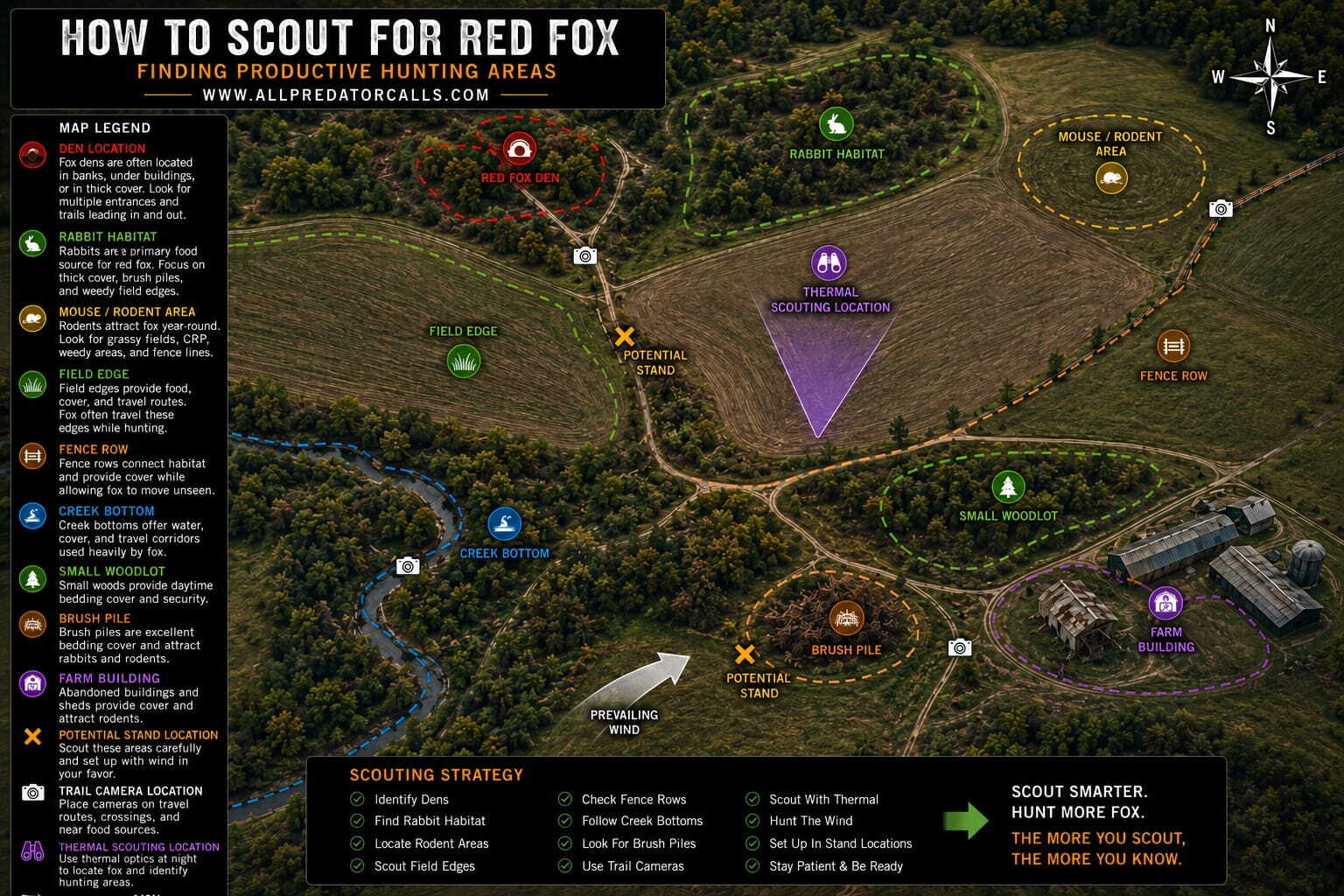
The most productive fox properties typically contain food, cover, travel routes, and fresh sign within a relatively small area.
Using Trail Cameras To Scout Red Fox
Trail cameras can help confirm fox activity, identify travel routes, and reveal when foxes are most active. Cameras are particularly useful around field edges, creek crossings, fence gaps, brush piles, and farmsteads.
Travel Routes
Confirm movement patterns and crossing locations.
Activity Times
Determine when foxes are using an area.
Population Monitoring
Estimate local fox numbers and activity levels.
Seasonal Changes
Track movement shifts throughout the year.
Thermal Scouting For Red Fox
Modern thermal optics have become one of the most effective fox scouting tools available. Thermal allows hunters to quickly identify active feeding areas, travel routes, and concentrations of prey species after dark.
Fox are often easier to locate with thermal than during daylight because they spend significant time hunting open fields and edge habitat during nighttime hours.
Thermal scouting can reveal exactly which fields, edges, and food sources foxes are actively using before you ever call.
Night Scouting With Hunting Lights
Nighttime observation with predator hunting lights can help identify active fox habitat and travel patterns.
Many fox hunters learn more about local fox activity during a few nights of observation than weeks of daytime scouting.
Snow Tracking Red Fox
Snow provides one of the best scouting opportunities available to fox hunters. Fresh tracks reveal where fox travel, hunt, cross fields, and enter bedding areas.
Fresh Tracks
Reveal current activity and movement direction.
Travel Routes
Identify regularly used movement corridors.
Hunting Areas
Show where fox are actively feeding.
Den Locations
May reveal areas of concentrated activity.
Seasonal Red Fox Scouting
Spring
Focus on denning areas and family groups.
Summer
Locate food-rich areas and water sources.
Fall
Young fox disperse and establish new territories.
Winter
Breeding activity often increases movement and visibility.
Scouting Red Fox vs Scouting Coyotes
Although fox and coyotes share some habitat, fox scouting often focuses on smaller areas, tighter cover, and prey-rich environments.
| Factor | Red Fox | Coyote |
|---|---|---|
| Home Range | Smaller | Larger |
| Preferred Habitat | Edge Cover | Varied |
| Farm Country | Excellent | Good |
| Rabbit Habitat Importance | Very High | Moderate |
| Small Cover Features | Important | Less Important |
Scouting Public Land Red Fox
Public land fox hunting can be highly productive when hunters focus on overlooked habitat features and areas with reduced human pressure.
- Remote field edges
- Abandoned farm sites
- Creek corridors
- Brushy draws
- Transition zones
Turning Scouting Information Into Productive Fox Stands
Once fox activity has been confirmed, the next step is converting that information into effective stand locations.
- Play the wind
- Focus on travel routes
- Maintain visibility
- Avoid overcalling the same locations
- Hunt fresh sign whenever possible
Related guides:
Recommended Gear For Scouting Red Fox
Related Fox Hunting Guides
How To Scout For Red Fox FAQ
Focus on habitat, tracks, scat, food sources, field edges, and thermal observation.
Red fox commonly use field edges, brushy cover, farm country, small woodlots, and prey-rich habitats.
Yes. Thermal optics can quickly identify active foxes and productive feeding locations after dark.
Trail cameras help confirm fox activity, identify travel routes, and determine activity periods.
Fox scouting typically focuses on smaller habitat features, edge cover, rabbit habitat, and smaller home ranges.