
How To Call Coyotes At Night
Learn proven night hunting tactics including scanning techniques, wind setup, shot timing, stand positioning, and how to use night hunting lights without spooking incoming coyotes after dark.
How Do You Call Coyotes At Night?
To call coyotes at night successfully, hunters should use continuous scanning techniques, control brightness carefully, set up with favorable wind direction, and avoid sudden movement or overexposing predators with bright light.
- Keep the scanning light moving constantly
- Use the outer halo of the beam
- Watch downwind for circling coyotes
- Increase brightness gradually
- Start with lower-volume calling sequences
Calling coyotes at night requires controlled scanning, smart wind setup, and disciplined light management. Most successful night hunters keep their scanning light moving continuously while watching for eye shine before slowly increasing brightness for identification and shooting.
Coyotes often respond more aggressively after dark, but they also rely heavily on scent and movement detection. Proper stand setup and avoiding overexposure with bright lights are critical for consistent success.
Choosing the right predator hunting light can dramatically improve visibility and reduce the chances of spooking incoming coyotes during night stands.
Keep your scanning light moving constantly. Sudden light changes and stopping your scan too often are some of the most common reasons coyotes spook before reaching the stand.
Night Hunting Stand Setup
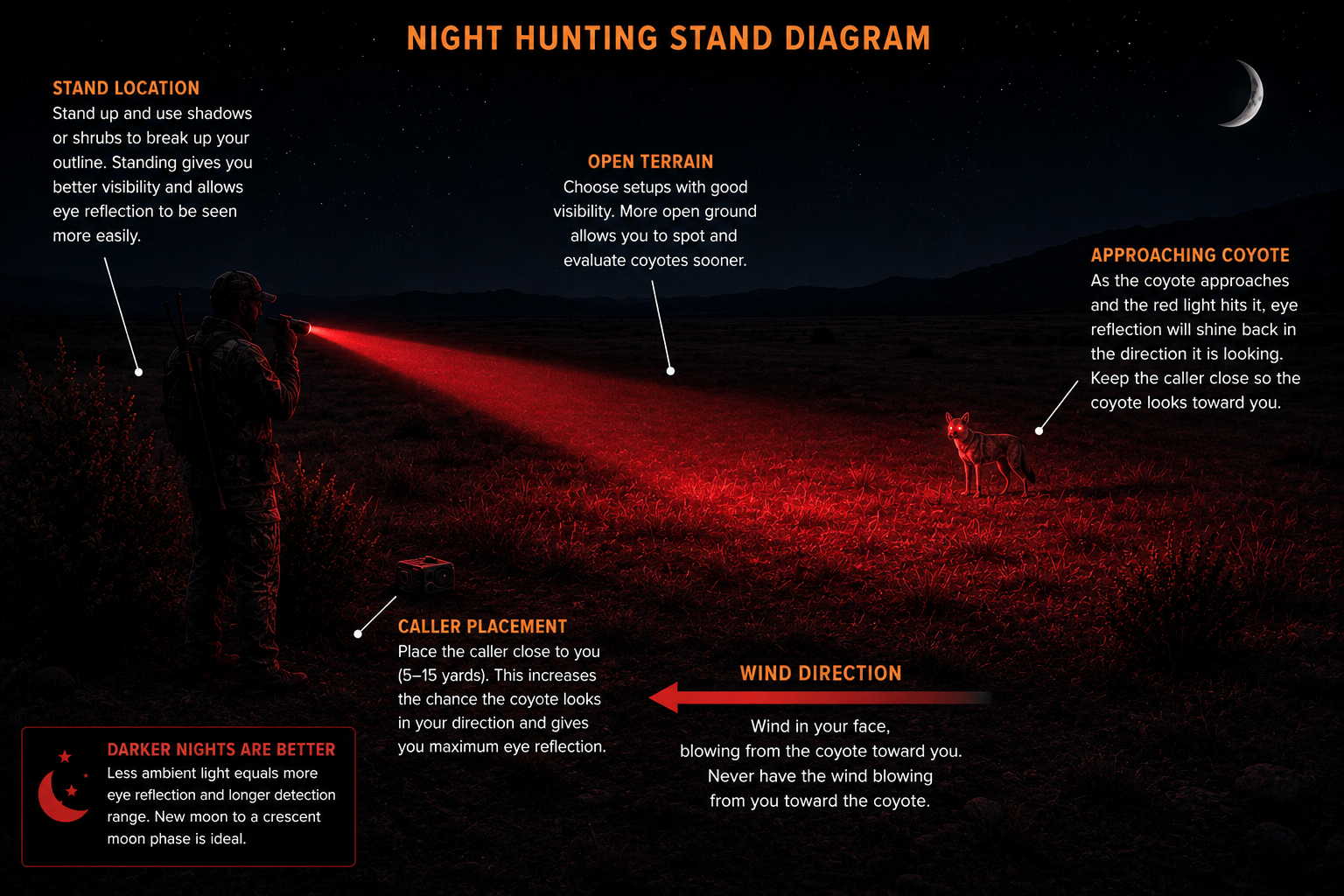
Proper stand setup is critical for success when calling coyotes at night. Unlike daytime predator hunting, night setups should prioritize visibility, eye reflection, and positioning that allows you to continuously scan and identify approaching coyotes under lights.
Stand Instead Of Sit
Standing improves visibility, helps your hunting light perform better, and makes eye reflection easier to detect as coyotes approach.
Use Shadows & Cover
Use shrubs, brush, shadows, and terrain features to break up your outline while still maintaining visibility in all directions.
Keep The Caller Close
Place the caller relatively close to your position so incoming coyotes continue looking toward you, increasing visible eye reflection in the beam.
Open Terrain Helps
Night hunting generally works best in more open terrain where visibility and scanning distance are improved.
Dark nights with limited moonlight typically produce stronger eye reflection and allow coyotes to approach more confidently. New moon to crescent moon phases are often ideal for night hunting with lights.
Using a quality tripod to hold your weapon will help simplify your night hunting setup (especially if you are standing). Look for a tripod that is stable and can attach to your weapon using either a direct attachment (picatinny or arca-rail) or a weapon vice. This allows you to keep the weapon secure on the tripod while being hands free to scan and run your calls.
Night Scanning Techniques
Use The Halo
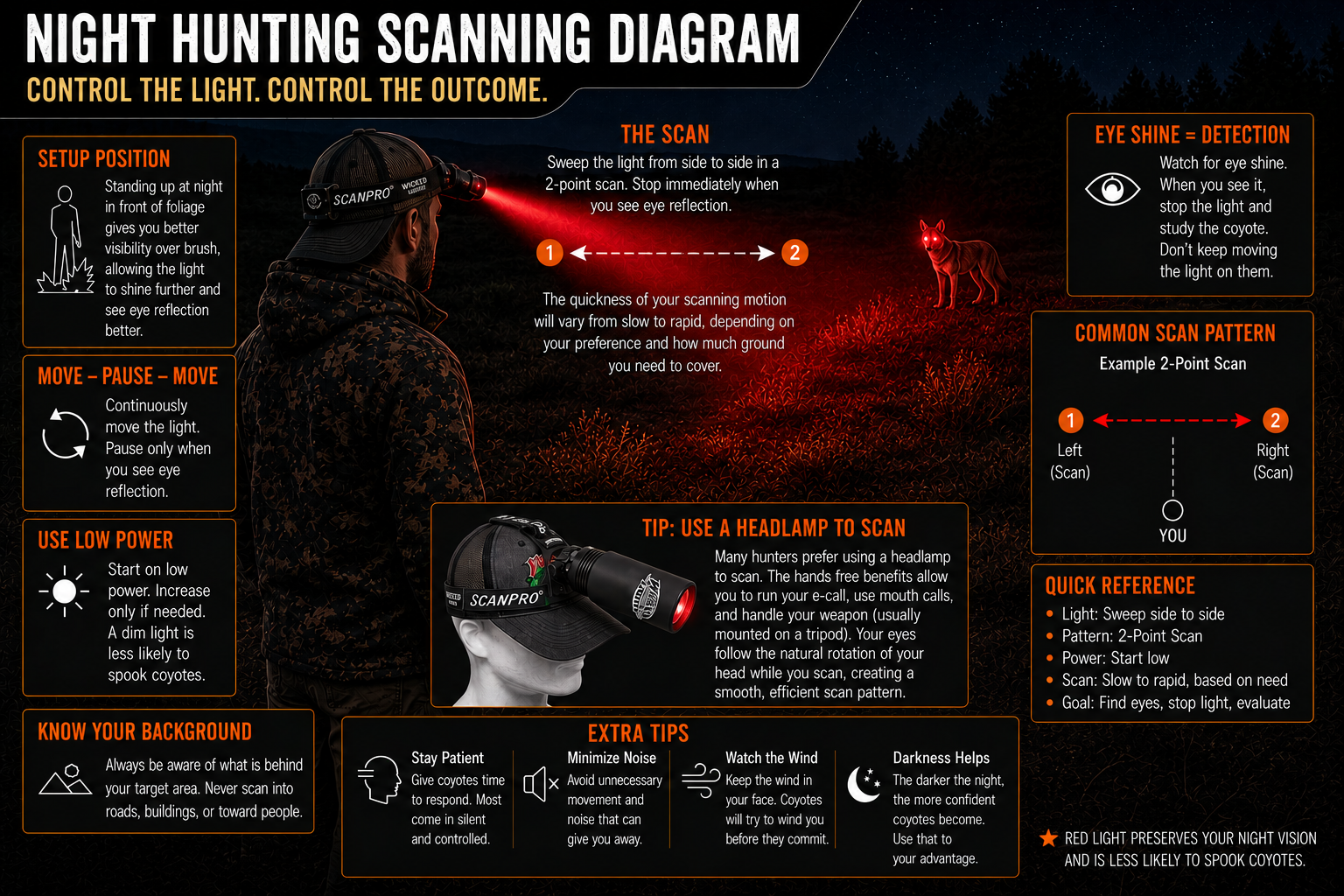
Scan using the outer edge of your beam instead of the brightest center hotspot.
Scan Continuously
Keep your light moving consistently across the terrain. Scan as fast or slow as you prefer, but cover your terrain as much as possible with light.
Watch For Eye Shine
Predator eyes are often visible long before the body becomes fully visible.
Increase Brightness Slowly
Gradually transition more light onto the coyote instead of instantly spotlighting it. This reduces the likelyhood that you "spook" the coyote.
Long-range coyote hunting lights with adjustable beam intensity make it easier to identify eye shine without overexposing approaching predators.
Use a Night Hunting Headlamp to scan. The hands-free benefits allows you to run your e-call, mouth calls, and handle your weapon. Your eyes will follow the natural rotation of your head while you scan and many hunters claim to see eye reflection better when the scanning light is mounted over their eyes.
Common Night Hunting Mistakes
- Scanning too slowly
- Using excessive brightness too early
- Ignoring wind direction
- Calling too loudly
- Stopping the scan too often
- Failing to watch downwind
Using the wrong predator hunting light setup is one of the most common reasons new night hunters struggle to consistently call coyotes after dark.
Night Hunting FAQ
Coyotes can detect red light, but it is generally less alarming than bright white light when used properly.
Red and green are the most common predator hunting light colors, depending on terrain and visibility needs.
Yes. Continuous scanning is one of the most important parts of successful night hunting.
Frequently. Many coyotes attempt to scent-check before fully committing.